
A Role for Environmental Philosophers
Environmental philosophers have an important job to do in the polycrisis. But is it one they are open to doing?

Have environmental philosophers failed? Joseph Heath says they have. At least if you take as a metric for success, their contribution to the major environmental crises of the current age. It might not be hyperbole to say that the current state of environmental crises (sometimes referred to as the poly-crisis or the meta-crisis) is the most pressing case of our need for philosophers in real life since at least the slave trade. And yet if you look to the output of environmental philosophy, at least according to Heath’s 2021 article ‘The Failure of Traditional Environmental Philosophy’ you find a discipline more interested in creating problems than solving them. Heath describes an esoteric competition of arguing over what exactly should be included in the sphere of moral concern. Seemingly oblivious to the fact that the current crisis is a concern for any of the potential inhabitants of whatever moral sphere one chooses. The climate crises, the toxicity crises, even the biodiversity crises are problems for humans and humanity. And solutions to any of these crises will yield benefits to the various peripheral communities whether or not we all agree to prioritize them. Arguing over who gets labelled with intrinsic value distracts from doing anything to help those who potentially possess it. “Indeed,” as Heath writes “if the goal had been to paralyze decision-making, it is not clear how environmental ethicists would have proceeded much differently." (Heath, 2021. p.14)
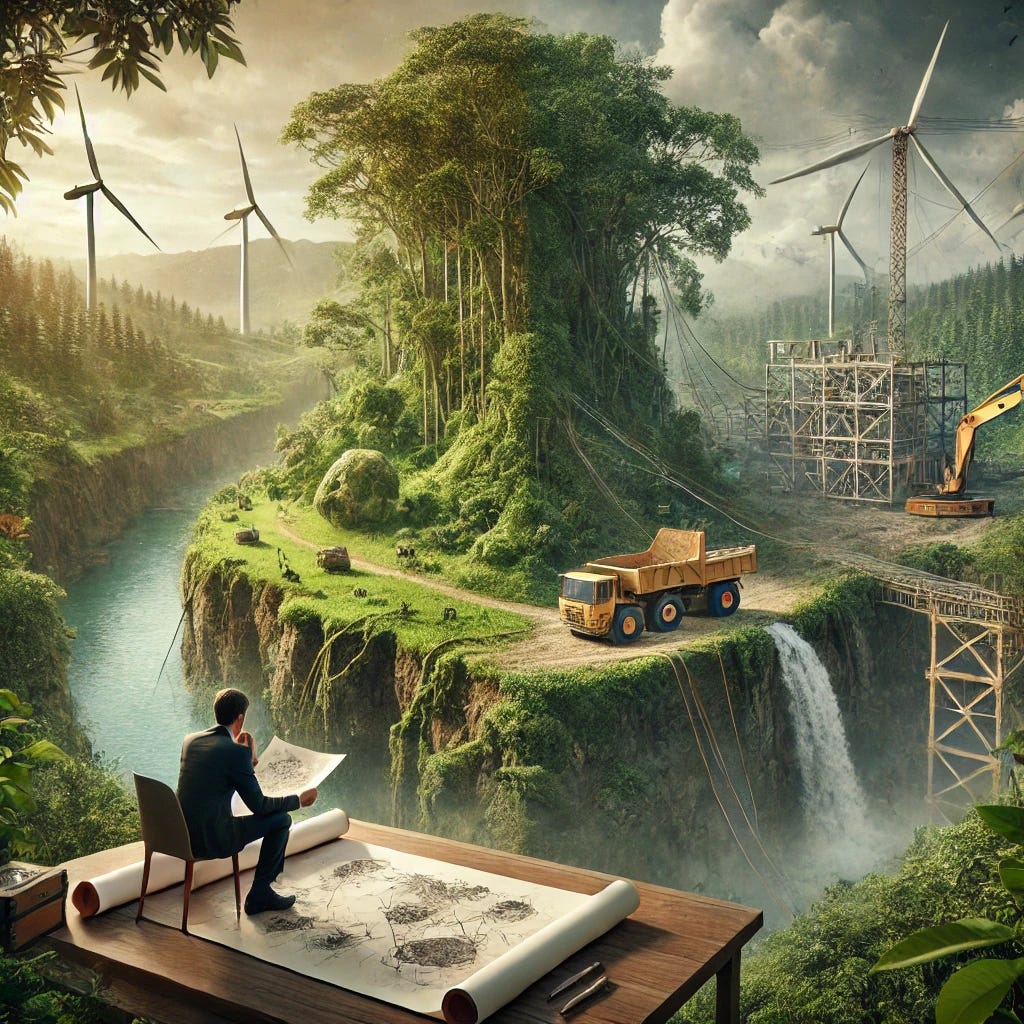
The real problems of the complex overlapping environmental crises involve trade-offs between values. Do we prioritize climate change mitigation over biodiversity conservation and how do we balance short-term economic growth with long-term environmental sustainability? Trade-offs involve uncertainties about the best course of action to achieve ends and uncertainties about the most important ends to strive for – given that we might not be able to achieve all the goals we would like to. Heath suggests that philosophers are - somewhat rightly – left outside of the ‘room where it happens’ and that decision-makers rely instead on economists since their quantitative methods can at least target the actual problems. What Heath leaves out, to my reading, is the role that environmental philosophers ought to take on. It is a bit hard to know what he is recommending beyond that philosophers take their meagre budgets and devote themselves to becoming second-rate economists in their own rights in hopes that a power in numbers could hasten the mathematically sound insights coming out of the economics departments.
“if the goal had been to paralyze decision-making, it is not clear how environmental ethicists would have proceeded much differently."
So what then is the role of an environmental philosopher in the modern world? It should be the same role that philosophy has always played, to address those components of knowledge that other disciplines do not. Philosophy is after all the mother discipline. The original word for science was natural philosophy, and a PhD in particle physics or biological engineering still has ‘Ph’ilosophy in the acronym. Over the centuries, specific methods have been developed to address certain types of knowledge, and when a domain of knowledge has been adequately addressed by a new method, we name a new discipline and de-facto remove that domain from the purview of philosophy.
The sundering of economics from philosophy began with Adam Smith who is remembered as the father of economics but was Professor Moral Philosophy at the University of Glasgow. In the time since Smith, economics has become the discipline of cause and effect in the realm of resources and human interactions. And so if economists have the methods for identifying what means we should use to achieve which ends, what does that leave for environmental philosophers? Joseph Schumpeter one of the most prolific and respected economists of the 20th century, reportedly realized it on his death bed. He understood that economics alone was a tool box without a project, and needed to be guided by ethics. Economics, after all is self-constrained as a discipline from considering normative questions about what we should do. Without a moral framework, economic systems risk losing sight of the societal well-being they are meant to serve. Many have pointed out that we have mistaken the measure for the mission, and devote ourselves to the pursuit of GDP without asking ‘what is GDP for?’
Environmental philosophers are needed then at least by the economists who are looking at envrionmental problems. They need to come down from the ivory towers to engage with the real issues of the day. Heath’s recognition that the policy conversations are driven by economists and political philosophers raises the question of whether environmental philosophers who engage with non-utopean reality would just end up being classified as political philosophers and the field would suffer a sort of brain-drain to the more practical extant disciplines. I do not think so. But it makes the thesis question of this essay more precise – what is the role of the environmental philosopher that isn’t political philosophy? Heath suggests it in his piece. “...environmental philosophy quickly became immersed in a debate over what amounted to a metaphysical question, concerning the nature of value...” (Heath, 2022. p.2 emphasis mine).
Environmental philosophers have a role to play in integrating various values into economic and political discussions. This is not so very far off from what Heath suggests they are currently doing. Instead of doing it in a way that courts controversy and seeks to build more and more extreme and tenuous moral claims that barely avoid collapse under their own weight (I am paraphrasing Heath here), environmental philosophers should aspire to engage with some of the practical problems associated with value pluralism. And which such problem stands out the farthest in the environmental realm? Trade-offs.
The nitty-gritty of the modern environmental crises is a morass of lesser evils and compromises, such as choosing between building a new wind farm and preserving the habitat it would be built on. Often the available trade-offs involve trading harms along one value category to make gains along some other value category. Minerals for the energy transition is the quintessential case of this. If we want to mitigate climate change we need to shift our reliance on fossil fuel infrastructure to new energy technologies, most of which involve large amounts of minerals. And these minerals involve a lot of environmental destruction in their acquisition and processing. There are trade-offs between human welfare, justice, biodiversity impacts, land-use, human health, and water quality, not to mention the localization of impacts in different areas. The details are overwhelming and the number of specific cases to be individually investigated is multiplying.
The narrative of climate change vs GDP growth that grew out of the Stern Nordhaus debates and is the framework that guides much sustainability discourse amongst philosophers and economists. Heath’s own Philosophic Foundations of Climate Change Policy, itself resides mostly in this framing. Climate change is, of course, a main concern of our time but is also considerably facile compared to the question of exactly where we should be mining each of the dozens of minerals which the energy transition depends on, what policies we should support in each case and who we should be trading with to acquire those that we don’t want to mine ourselves. There are details in each of these cases that deserve to be engaged with, and there ought to be environmental philosophers available to engage with them.
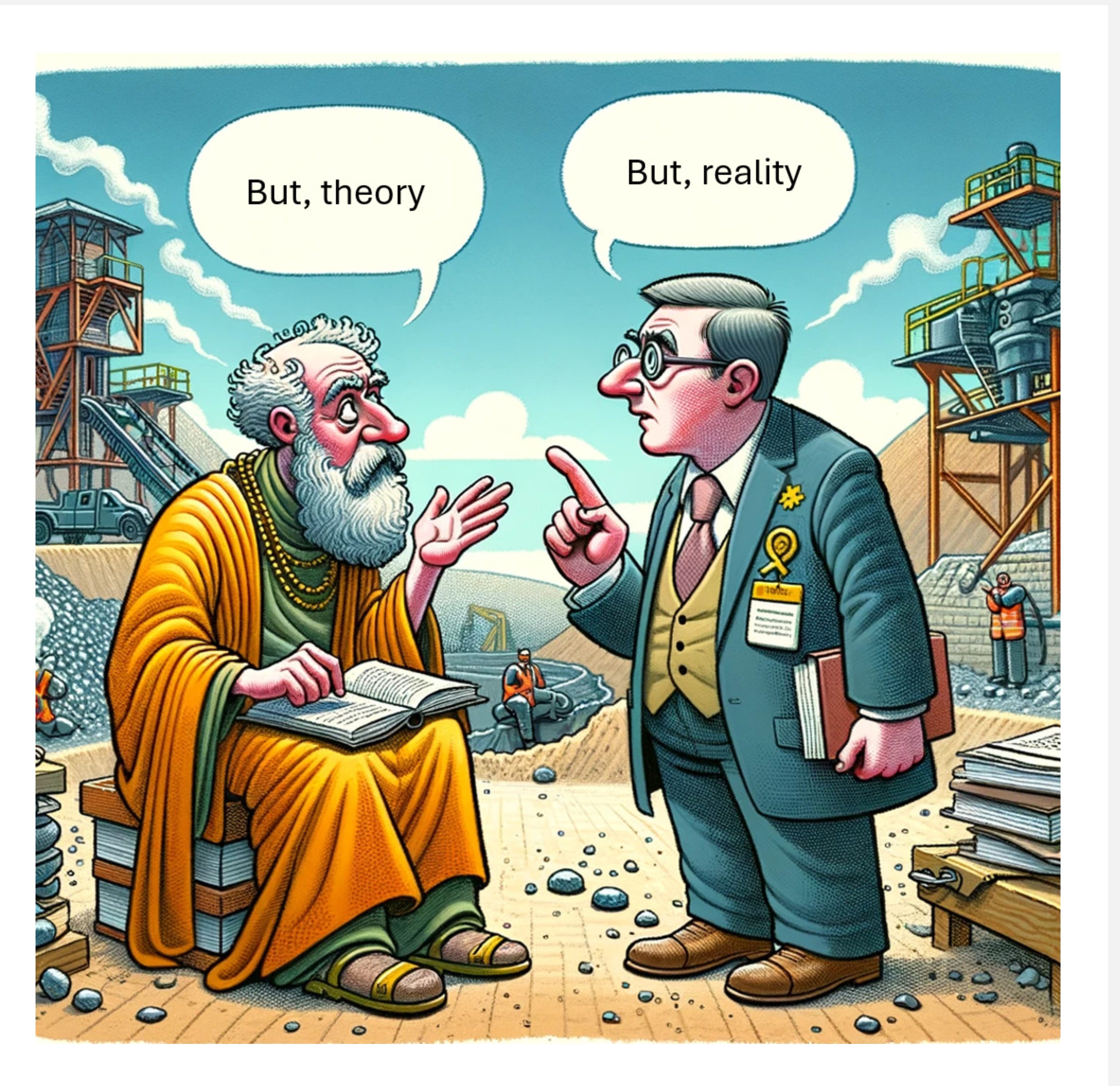
If there is an over-abundance of unemployable graduates from ethical humanities departments, it signals a profound market failure. The world is awash with complex, context-specific trade-offs between competing moral values—questions that demand not only the precision of economic modeling but also the nuanced judgment of ethical reasoning. Environmental philosophers have a critical role to play in bridging this gap. It may not be the role they are accustomed to, and it will likely require them to engage more deeply with the messy, intricate realities of policy and practice. But by doing so, they could offer invaluable guidance in addressing the moral complexities of our time—benefiting us all in the process.